

Cappings
Pierce County Beekeeping Association
Monthly Newsletter
January 2026 - Volume 32 - Issue 1
From the President
Buzzing Into 2026!
Happy New Year, fellow beekeepers!
As we begin 2026, I'm honored and excited to step into the role of PCBA President. After serving four years as your Vice President, I'm ready to lead our organization into what I believe will be an exceptional year for our beekeeping community.
Welcome to Our New Leadership Team
I'm delighted to introduce our outstanding leadership team for 2026. Michelle Cyree brings tremendous energy to the Vice President role, Fawn Casey will ensure our finances remain sound as Treasurer, and Nate Chambers continues the vital work of Secretary. Together with our dedicated committee chairs, this team is positioned to make significant strides this year.
Our Vision for 2026
We have ambitious goals ahead, but as beekeepers who manage thousands of complex organisms, we're certainly up to the challenge. Here's what we're focusing on:
Strengthened Leadership Structure - We're implementing a committee-based framework that distributes responsibilities effectively across our organization. This ensures sustainability and prevents volunteer burnout while maximizing our collective impact.
Membership Growth - Our goal is to increase active participation by 15% through enhanced outreach and programming. We want every member engaged and contributing to our vibrant community.
Expanded Education - We're developing a plan to offer comprehensive apprentice and master beekeeper programs that go beyond the basics of our current programming. Our focus remains on sustainable practices, colony health, and creating space for respectful dialogue about all management approaches - from treatment protocols to treatment-free methods.
Improved Communication - We're leveraging our digital platforms more effectively to keep members informed and connected throughout the year.
Member Benefits and Resources
We're exploring group purchasing programs for seasonal supplies - replacement bees, woodenware, varroa treatments, sugar, and essential equipment. Bulk buying means real savings on everything from spring packages to summer treatments to honey containers.
Additionally, we're investigating commercial kitchen certification for our Honey House, which could open exciting possibilities for value-added honey products.
Spring Preparation
It's time to order your bees! We're coordinating a bulk nuc order from Double R Farms in Yakima - please mention your PCBA membership when placing orders to count towards our bulk order. Dolce Bella Bees is also accepting orders, with packages and nucs available for pickup April 12-13. Early ordering is encouraged. Information for both vendors is below.
Volunteer Opportunities
PCBA thrives because of member involvement. We have diverse opportunities available: Apiary Days, swarm call response, honey house maintenance, newsletter contributions, educational instruction, event coordination, and social media management. Whether you prefer hands-on work or behind-the-scenes support, there's a meaningful role waiting for you. Connect with our team leads at meetings or through the QR codes provided.
Upcoming Events
February 2 - Pierce County will present on noxious weed spraying protocols and how to protect your property and colonies from chemical drift.
March 2 - Our annual Silent Auction and Potluck replaces our regular class format. Start planning your contributions and preparing your bid list!
Moving Forward Together
Since the 1940s, PCBA has endured and flourished because we're more than an organization - we're a community united by our passion for pollinators, commitment to education, and dedication to supporting one another. Whether you're just beginning your beekeeping journey or bringing decades of experience, you have a valued place here.
Let's make 2026 a year of growth, learning, and thriving colonies.
Here's to a sweet year ahead!
Kathleen

Member News
*** IMPORTANT VOTE***
There will be a vote by members regarding an update to the bylaws on March 2. An email reminder will go out on January 30, 2026, as well.

The PCBA Club Board presented this plaque to Mary Dempsey in honor of her service on the Board and to the club. Thank you to Travis Swanlund for creating this for us!
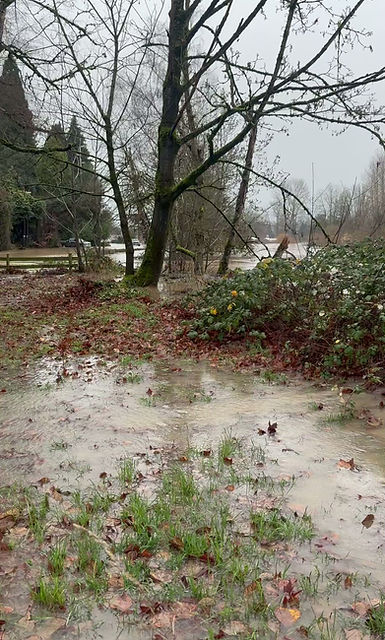


These storm photos and videos are courtesy of Stephen Poore!
Stephen was asked to rescue 20 hives from a farm in the Auburn / Kent area. The owners were in Arizona and did not realize their farm and hosted beehives were under water.
Stephen was allowed to drive past police barriers to tend to the hives. All were moved to higher ground and are doing well so far.
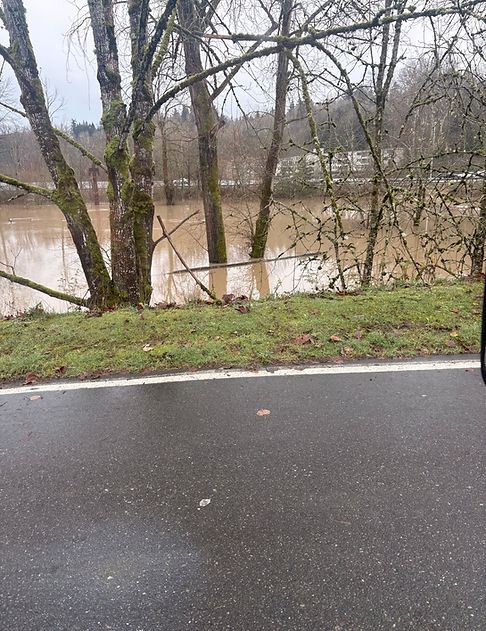


Although not pictured, Stephen received a bee sting right under his eye for his trouble!
Events and Announcements
Volunteers, we need you! PCBA couldn't happen without you. Ten (10) hours per year of volunteer service is required for each member.
Please sign up to help with the upcoming events. It is a great time to get to know other members and educate the community about the bees and what are organization is all about. Some of these events are fundraisers where we will be selling honey.
From brand new beekeeper to experienced beekeeper, you have a place at our table! You pick your comfort level, from selling the honey and raffle tickets to just talking about bees. Scan the QR codes below for more information.
If anyone is interested in assisting with managing our social media account, please contact Kathleen at president@pcbeekeepers.org.
Important dates in 2026 - Mark your Calendars!
Here is a link to our 2026 Calendar of Events.
February 2
6-7pm - Beginning Beekeeping Class #2, Honey Bee Biology
Apprentice Level, Hive Styles & Equipment
7-8pm - PCBA Monthly Meeting featuring Jeff Rudolph from Pierce County's Spray Program
March 2
6-7pm - Beginning Beekeeping Class #3 - Hive Management Winter to Spring
Apprentice Level, Hive Management
7-8pm - Annual Auction and Potluck

Honey House Signup

Apiary Team Signup

Presenter Signup


Club Directory
(for questions or to reach out to other club members)
Other Education Resources
Pierce County - Seed, Sow, Share
The 2026 Seed Swap will be held on Sunday, February 1, in Puyallup at the Pioneer Park Pavilion from 12pm - 3pm.
Pierce County - Edible Gardens Workshop Series
Explore the basics of successful vegetable gardening in the Pacific Northwest - from seed to table. Classes are taught by educators from Harvest Pierce County. Most classes are Saturdays from 10a.m.-12p.m., with some classes from 1-3p.m. All classes are free. The first class is February 7 from 10am-12pm. For more information, visit this website.
WSU Honey Bees + Pollinators Program
Here are free webinars offered by the WSU Honey Bees + Pollinators Program. For the unfamiliar, this program is part of the College of Agricultural, Human, and Natural Resource Sciences (CAHNRS). The program's mission "intertwines innovative research, community engagement, and education to safeguard pollinators, pivotal to our food security and environmental health.
Webinar: Veterinary Feed Directives and Honey Bee Disease - March 19, 6-7:30pm
Webinar: Monocropping Systems and Bees - April 16, 6-7:30pm
Mite Management Toolbox Workshop, WSU Honey Bee and Pollinator Facility, Othello, WA - May 2, 10am-4pm
You can also follow their events page here.
The WSU Honey Bees + Pollinators Program is listed on Michigan State University's MSU Extension Pollinators & Pollination site which lists beekeeping and pollinator webinars from university extension programs across the United States. You can access these programs from wherever you are in the country at their website here.
Ask a Washington Beekeeper - WASBA
WASBA's Ongoing Project "Ask a Washington Beekeeper" is a collaboration between WASBA and GRuB and is designed to reach beekeepers who may be in outlying areas without access to a mentor or a beekeeping club. Their goal is to provide information, education and mentoring to as many people as possible, including veterans who are interested in beekeeping. An educated beekeeper is a better beekeeper and is better for the beekeeping community. Programs typically run monthly on the third Thursday starting at 6:30 p.m. Check it out and tell your friends! Here is the link: https://www.facebook.com/AskAWABeekeeper.

Current State of American Beekeeping:
Key Issues and Research for 2026
As we move through January 2026, American beekeepers face a confluence of challenges that demand evidence-based strategies and adaptive management. This article synthesizes recent research, national trends, and region-specific considerations to provide a detailed reference for practitioners seeking to understand the current state of our industry.
Colony Losses
The 2024-2025 U.S. Beekeeping Survey reports a devastating 55.6% annual colony loss rate—the highest on record since systematic tracking began in 2010. Winter losses alone reached 40.2%, with commercial operations bearing the brunt of both mortality and economic impact. These figures represent more than 1.6 million colonies lost, translating to an estimated $600 million in direct beekeeper losses and threatening $17 billion in U.S. agricultural production dependent on pollination services.
Washington State Context: Our state exceeds the national average with over 43% colony losses, making the situation particularly acute for Pacific Northwest beekeepers. The combination of wet winters, variable weather patterns, and pest pressures creates unique challenges for overwintering success.
Varroa Mites: Resistance and Viral Transmission
Varroa destructor remains the primary driver of colony collapse, but the threat has evolved significantly. Recent USDA research identifies amitraz-resistant mite populations carrying high viral loads of deformed wing virus (DWV-A and DWV-B) as a principal cause of the 2025 collapses. Critically, triage surveys covering over 50% of U.S. colonies found no significant difference in loss rates between operations using amitraz-based treatments and those using alternatives, suggesting widespread resistance.
Current Treatment Strategies
Research published in 2025 provides specific guidance:
-
Oxalic Acid: Studies from the University of Florida demonstrate that 4g doses provide superior mite reduction during summer months without colony harm, though sealed brood limits efficacy during active rearing periods.
-
Integrated Pest Management: The newly EPA-approved Vadescana offers an additional tool, but researchers emphasize treatment rotation to prevent resistance development.
-
Monitoring Thresholds: Maintain mite levels below 6 per 300 bees (or per half-cup sample). Commercial operations reporting losses exceeding 60% consistently cite Varroa as the primary factor in triage surveys.
Breeding for Resistance
April 2025 research in entomological journals highlights breeding programs targeting Varroa Sensitive Hygiene (VSH) and mite non-reproduction (MNR) traits. However, these characteristics show high variance in inheritance, requiring sustained selection pressure across multiple generations. Meta-analyses of commercial populations reveal restricted mitochondrial DNA haplotypes, underscoring the need for policy changes to support genetic diversity through regulated queen imports and conservation of regional adaptations.
Climate Change: Quantifying the Impact
Multiple 2025-2026 studies document climate effects on colony health:
Temperature Extremes
Research from Arizona universities published in early 2026 demonstrates that sustained temperatures exceeding 40°C (104°F) cause severe hive temperature fluctuations, leading to population declines particularly in smaller colonies. Bees adapt by modifying wingbeat frequencies to enhance cooling, but this physiological stress reduces disease resistance and foraging efficiency.
Phenological Mismatches
December 2025 research in Nature predicts climate-driven vegetation shifts will create temporal mismatches between flowering and bee activity cycles. With global temperatures projected to rise 2.7-4°C by century's end, these disruptions threaten forage availability across major agricultural regions.
Regional Impacts
Triage surveys identify weather as a disproportionate loss factor for smaller-scale operations, with nutritional stress compounding other stressors. For Washington beekeepers, wet winters present specific challenges including mold development and difficulty maintaining proper hive ventilation—a topic emphasized in WSU's "Ask A WA Beekeeper: Overwintering" sessions.
Economic Pressures and Market Dynamics
The 2025 IBISWorld analysis projects U.S. beekeeping industry revenue at $640.2 million, representing a 3.2% compound annual decline. Key economic factors include:
-
Import Competition: Over 60% of U.S. honey demand is met through imports, suppressing domestic prices.
-
Cost Inflation: Production costs have risen 45% over five years, with pollination fees increasing to $300 per hive in some markets to offset losses.
-
Market Consolidation: Industry concentration continues as smaller operations exit due to unsustainable loss rates.
-
Pollination Services: Despite declining honey revenue, commercial beekeepers are diversifying into pollination contracts, particularly for California almond production.
WSU projections anticipating 60-70% losses in some regions highlight why pollination fees must increase to maintain economic viability—a trend reshaping business models across the industry.
Technology Adoption and Innovation
Research from 2025-2026 documents accelerating technology adoption:
Smart Hive Systems
A 2026 analysis projects smart hive monitoring adoption will rise from 42% in 2025 to 57% in 2026. These systems employ IoT sensors to track:
-
Temperature and humidity fluctuations
-
Weight changes indicating nectar flow or food depletion
-
Acoustic signatures for swarm prediction
-
Real-time health alerts
Field studies report 70% efficiency gains in inspection time, enabling beekeepers to manage larger operations with reduced labor.
Flow Beekeeping
Flow hive technology claims 70% harvesting efficiency improvements through self-draining frame systems, though adoption remains concentrated in hobbyist markets.
AI-Powered Management
August 2025 developments include AI-driven "BeeHome" systems providing automated threat detection and environmental optimization. The American Beekeeping Federation's January 2026 conference in Mobile, Alabama featured extensive presentations on these innovations.
Washington Application: For beekeepers managing remote outyards in Eastern Washington's agricultural areas or Western Washington's dispersed locations, remote monitoring technology offers particular value in reducing travel costs while maintaining surveillance during critical periods.
Genetic Diversity and Policy Considerations
The genetic bottleneck in U.S. honey bee populations poses long-term sustainability risks. Recent research emphasizes:
-
Limited Genetic Base: Commercial populations show restricted genetic diversity, particularly in mitochondrial markers, limiting adaptive potential.
-
Queen Import Policies: Current regulations may inadvertently constrain genetic diversity. Some beekeepers advocate for policy changes to end mandatory re-queening of wild swarms, arguing this practice creates genetic bottlenecks contributing to die-offs.
-
Breeding Programs: USDA initiatives focus on expanding genetic resources while selecting for pest resistance and regional adaptation. However, coordination between research programs and commercial breeding operations remains inconsistent.
Current Events and Community Engagement
National Gatherings
The American Beekeeping Federation Conference (January 6-10, Mobile, Alabama) and North American Honey Bee Expo (January 8-10, Louisville, Kentucky) serve as primary venues for knowledge exchange, featuring presentations on:
-
U.S. beekeeping survey results
-
AI-driven monitoring systems
-
Integrated pest management protocols
-
Honey bee health initiatives
Research Programs
The U.S. Winter Capped Brood Monitoring Project, active throughout January, engages citizen scientists in collecting standardized hive health data. The APHIS National Honey Bee Survey (July 2025) continues surveillance for exotic pests including Tropilaelaps mites, maintaining confidence in their absence from U.S. apiaries.
Washington-Specific Activities
-
SnoKing Beekeepers: Active participation in Winter Capped Brood Monitoring Project
-
COLOSS North American Event: WSU's Bee Program promotes this June 2026 international gathering on bee health strategies
-
WASBA PNW Conference: October 2-3 in Wenatchee—mark calendars for this regional gathering
Educational Initiatives
February 2026 features intensive beginner workshops through Northwest District Beekeepers Association and Three Rivers Beekeepers, reflecting renewed interest in apiculture despite industry challenges. WASBA's certification program (Apprentice through Master levels) provides structured advancement for serious practitioners.
The Washington Native Bee Society's January 22 webinar on native bee identification highlights growing recognition that honey bee health exists within broader pollinator ecosystem contexts.
Month-by-Month Management Priorities for 2026
January-February: Winter Survival Phase
-
Critical Tasks: External hive checks only; assess food stores by hefting; emergency feeding with dry sugar or fondant; equipment repair and preparation
-
Washington Specifics: Address moisture management in wet western climates; ensure adequate insulation in eastern regions; complete hive registration with WSDA to fund state research programs
-
Research Note: Avoid opening hives below 50°F to prevent cluster disruption
March: Spring Buildup Initiation
-
Critical Tasks: First full inspections on warm days; oxalic acid dribble before brood sealing; package/nuc installation; drone frame addition
-
Monitoring: Assess queen performance and brood pattern; watch for early swarm preparations in mild areas
-
Regional Variation: Western Washington may see earlier activity; adjust timing based on local bloom patterns
April-May: Expansion Phase
-
Critical Tasks: Weekly inspections; syrup feeding for new colonies; splits from strong hives; super addition for blackberry flow (PNW-specific)
-
Pest Management: First alcohol wash mite counts; establish baseline for treatment decisions
-
Infrastructure: Queen excluder placement; ensure adequate space for nectar storage
June-July: Production Peak
-
Critical Tasks: Early honey harvest; formic acid treatments; drone brood removal; extraction during main flow
-
Threshold Management: Treat if mite counts exceed 6 per 300 bees (critical given resistance data)
-
Preparation: Anticipate summer dearth; ensure adequate stores remain
August-September: Fall Preparation
-
Critical Tasks: Aggressive Varroa control (Apivar or alternatives given resistance); entrance reduction; ensure 60-80 lbs stored honey; final treatments
-
Protection: Mouse guard installation; predator deterrence
-
Assessment: Evaluate queen performance for potential replacement
October-November: Winter Preparation
-
Critical Tasks: Final inspections; treatment removal; hive wrapping in cold regions; minimal disturbance
-
Planning: Equipment maintenance; 2027 supply orders; review season data
-
Washington Event: WASBA Conference attendance for knowledge exchange
December: Dormancy
-
Critical Tasks: External monitoring only; emergency feeding if absolutely necessary; research and reflection
-
Professional Development: Review literature; plan improvements based on seasonal observations
Policy and Advocacy Considerations
Several policy debates merit attention:
-
Hive Registration Requirements: State-level registration (mandatory in Washington) funds research and emergency response programs. Compliance directly supports infrastructure beekeepers depend upon.
-
Pesticide Regulations: Ongoing debates balance agricultural productivity against pollinator protection. Recent neonicotinoid research demonstrates synergistic effects with Varroa infestation, disrupting overwintering longevity.
-
Genetic Resource Management: Questions surrounding wild swarm re-queening requirements and queen import protocols require evidence-based policy development balancing genetic diversity with disease management.
-
Climate Adaptation Support: As projections indicate intensifying challenges, beekeepers may need to advocate for research funding addressing heat tolerance, drought resilience, and phenological adaptation.
Actionable Recommendations
Based on current research and industry trends:
-
Implement Rigorous IPM: Monthly mite monitoring using standardized methods (alcohol wash or sugar roll); maintain detailed treatment records; rotate chemical classes to prevent resistance.
-
Diversify Revenue Streams: Consider pollination contracts, nucleus colony production, or queen rearing to buffer honey price volatility.
-
Invest in Monitoring Technology: For operations managing 25+ hives, remote monitoring systems offer positive return on investment through labor efficiency and early problem detection.
-
Participate in Citizen Science: Programs like Winter Capped Brood Monitoring generate data benefiting the entire industry while improving individual management skills.
-
Engage in Continuing Education: Attend regional conferences (WASBA, ABF, NAHBE); participate in local association workshops; stay current with research literature.
-
Prioritize Genetic Quality: Source queens from breeders selecting for VSH, MNR, and regional adaptation traits rather than prioritizing solely on price.
-
Document Everything: Maintain detailed records of treatments, inspections, weather conditions, and outcomes to identify patterns and optimize management decisions.
Conclusion
American beekeeping in 2026 faces documented challenges requiring sophisticated, evidence-based responses. The 55.6% national loss rate—and Washington's 43%+ losses—demand more than incremental adjustments. Success requires integrating current research on mite resistance, climate adaptation, and genetic management into everyday practice.
The technology, knowledge, and community support structures exist to address these challenges. Whether through precision monitoring systems, advanced breeding programs, or coordinated policy advocacy, paths forward exist for committed practitioners willing to adapt management strategies based on emerging evidence.
For Washington beekeepers specifically, our unique climate conditions, strong research support through WSU, and active association network provide resources that, when fully utilized, position us to lead in developing solutions applicable across diverse environments.
The question is not whether we can sustain viable beekeeping operations, but whether we will implement the practices and policies that research demonstrates are necessary. The coming months offer opportunities to translate knowledge into action—beginning with the winter management decisions we make today.
References and Further Reading
National Loss Data:
-
2024-2025 U.S. Beekeeping Survey: agriculture.auburn.edu
-
Bee Informed Partnership Triage Surveys: honeybeehealthcoalition.org
Varroa Research:
-
USDA ARS Resistance Studies: ars.usda.gov
-
Scientific Beekeeping (Randy Oliver): scientificbeekeeping.com
-
University of Florida Oxalic Acid Research: nwdistrict.ifas.ufl.edu
Climate Impact Studies:
-
Nature Climate Research (December 2025)
-
Science Daily Heat Wave Studies: sciencedaily.com
Economic Analysis:
-
IBISWorld Industry Reports: ibisworld.com
-
WSU Economic Projections: news.wsu.edu
Washington State Resources:
-
WASBA: wasba.org
-
WSU Bee Program: bees.wsu.edu
-
WSDA Hive Registration: WSDA Apiary Program
Technology and Innovation:
-
Farmonaut Agricultural Technology Reviews: farmonaut.com
American Beekeeping Federation Conference Materials: abfnet.org
Committee Reports
Swarm Team
If you have signed up to be on the swarm team please make sure your membership is current.
Also, please add Chris Camper to your contact list so that you will know that it is Chris calling and not a spam call. Chris' phone number is 253-319-0327 press 2 for swarms.
Our insurance company needs waivers signed by the community and also by you, the beekeepers. Follow this link to the waiver.

Education
Apiary Days are weather dependent and are scheduled April through October. Club hives are closed for the season.
Please keep an eye on our Facebook Group for updates on what is planned in the Spring. Rescheduled dates or times and topics will also be announced on our Facebook Group page.
PCBA Beekeeping Class Information
Classes are available to PCBA Members only
Become a Member
Sign up for Classes on our website
Location:
WSU Puyallup Research & Extension Center
D.F. Allmendinger Center
2606 W Pioneer Ave, Puyallup, WA 98371
Classes are January - November (See Events and Announcements above for upcoming classes and topics)
Contact Katie Marler (education@pcbeekeepers.org) with any questions.

Membership & Fundraising
PCBA is accepting donations for our annual potluck and fundraising auction on March 2.
Please bring your items to auction to the event on March 2, and join us ready to bid! Watch our Facebook Group posts for updated information.
Contact Jade Monroe (events@pcbeekeepers.org) with any questions.


Resources and Tools
Become a Member
We are asking all of you participating on our social platforms and subscribing to please sign up for membership in 2026 and help us continue to grow our resources and programs.
For those who are already members, your membership will be renewed on your anniversary date. If you are unsure of your status, you can email president@pcbeekeepers.org. Thank you!
Hive Host and Beekeeper List
We have many hosts, but we need more BEEKEEPERS! We are building a list of those offering properties for hive hosting, as well as beekeepers who would like to service hives on host properties. With Spring coming, it is time to sign up! To join this list and be matched with a potential host or beekeeper, please sign up here.
Other Resources
Beekeeping for Veterans - https://wafarmvetco.org/healing-through-hives
The Roles of Flies as Pollinators of Horticultural Crops - https://pmc.ncbi.nih.gov/articles/PMC7349676/
Resource List for Diagnostic Testing of Honey Bees - 2024
If you want an answer on the cause of death of your bees, the following is a list of organizations in the United States that may be able to assist you. For a complete list of diagnostic labs and what they will test, go to this website: https://apiaryinspectors.org/page-18060.
If you believe the apiary was damaged though the use of pesticides and if you have registered your hive(s) with the State Department of Agriculture, you can also contact Katie Buckley (Pollinator Health Coordinator) with the WA Department of Agriculture and report the situation as a potential bee kill: kbuckley@agr.wa.gov. They usually only formally investigate if it is a large number of hives that were killed.
WSU Bee Program recommends people send their bees to the Beltsville Bee Lab, a free source in Maryland. This facility tests for bacterial, fungal and microsporidian diseases, two species of parasitic mites, and other honey bee pests. They also test for American foul brood when requested. This lab does not test for viruses or pesticides.
The following all charge for their testing services.
Virus Testing (not pesticides)
-
North Carolina State - fees range from $24-$320
-
National Agricultural Genotyping Center - fees range from $60-$300
Pesticide Testing (not viruses)
-
Synergistic Pesticide Laboratory - this is a lab WSU's bee program has used. Direct contact is Camille Holladay (cholladay@synpestlab.com). Fees range from $165-$365.

Marketplace
Double R Farms
PCBA will be doing a bulk order of nucs from Double R Farms in Yakima. If you would like to join in on our order, bees will be delivered here on site. Date of arrival will be planned one week in advance.
You must say you are with PCBA for your nucs to be included in the delivery (otherwise, you will need to pick them up in Yakima).
Price: TBD
Contact: Randon Hodges @ 509-452-8267, or order through email on website www.doublerhoneyfarms.com.
Dolce Bella Bees
Nucs, packages and queens are available in 2026. Order now, delivery will be on April 12 and 13.
Andy will be doing a basic beekeeping class on Sunday (April 13). Bring your bee suit, boots and gloves. Limited bee equipment will be available as Dolce Bella strives to support our local beekeepers homemade hives and equipment. This is the 16th anniversary of Dolce Bella Bees.
Price:
3-pound packages and nucs (queens available for all breeds):
$165 for Italians
$190 for Carniolan
$195 for Saschatraz
$195 for Golden West
Contact:
Nucs and packages must be prepaid. Orders must be placed by March 28, 2026. Make checks payable to Alisa Shorey. Address for pickup is 7415 276th St E, Graham, WA 98338.

Contacts and Feedback

Please complete this survey to give us feedback on how to make this a better club. What would you like to see? What would make this a more valuable experience for you in your beekeeping endeavors?
Leadership Team 2026
Please reach out to us with questions, feedback, suggestions. We'd love to hear from you!